

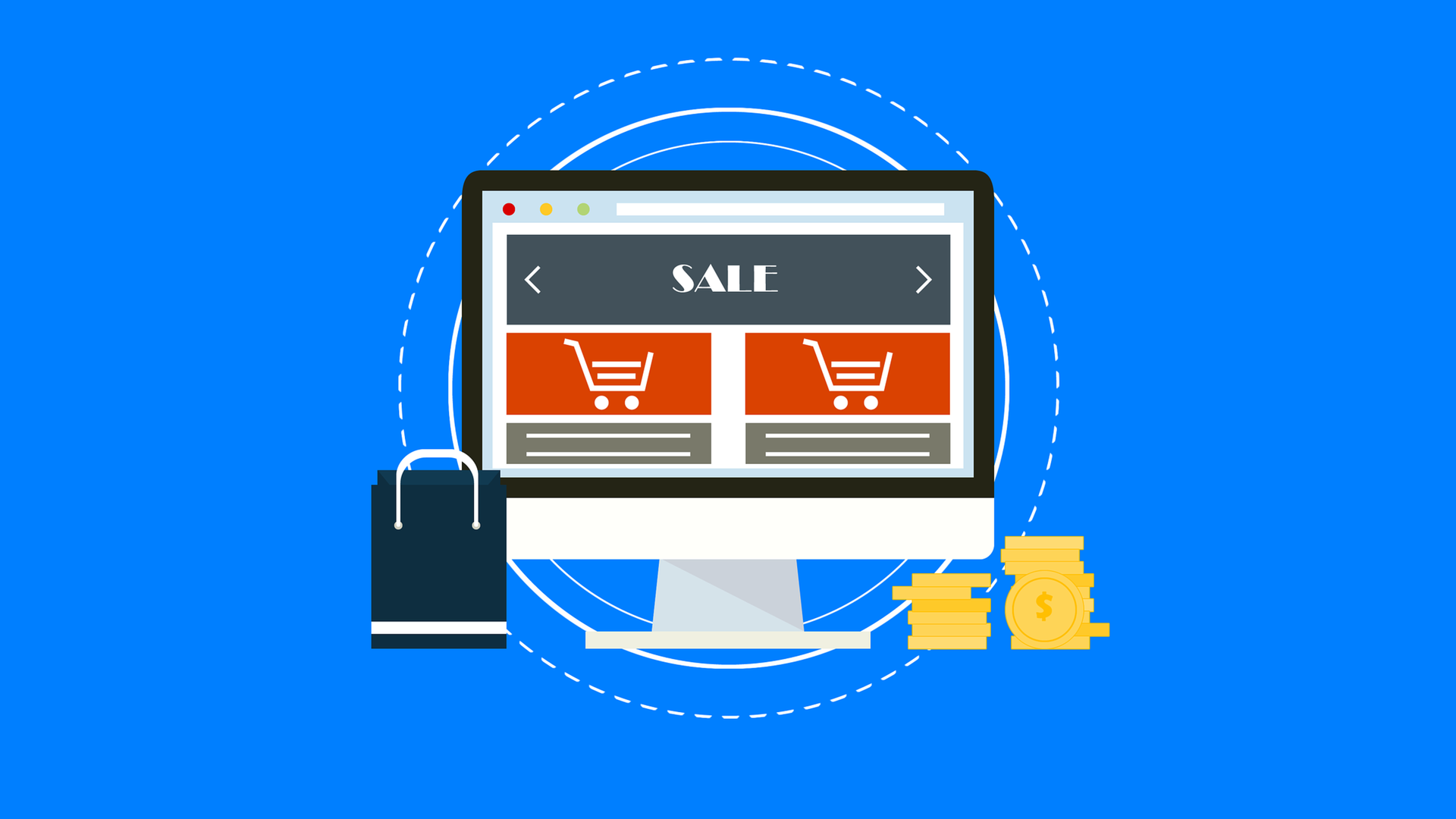

The conversion of a visitor into a customer is the great and most difficult goal of any e-commerce.
More stories in the category Technology
- Project Helix will maintain backwards compatibility: Microsoft ensures support for four generations of Xbox
- Get for free on iOS and Android the great Little Nightmares
- The Revolution X Unlimited Anniversary Edition controller can now be reserved for Xbox and PC
| Don't miss anything and follow us on Google News! |
The conversion of a visitor into a customer is the great and most difficult goal of any e-commerce business. Receiving visits is relatively easy, but getting a good part of them to translate into purchases, whether momentary or successive, is the complicated part. The advantage is that this market is advancing at giant steps, especially with the incorporation of AI, and today there are numerous actions that can be taken to improve the conversion rate.
From the “classic” email marketing to the possibility of creating an effective landing page, the tools that a company has to increase its customer base in the digital space have multiplied. The key is to know the type of audience being targeted and to carry out specific actions, directed specifically to achieve that goal. In this post, we will learn about the most efficient measures to increase the audience and thus achieve an increase in sales.
Email marketing is still working
As we have said, email marketing is already a traditional method in capturing the public within the online format. The system is simple, but increasingly effective. In the midst of social networks and instant messaging applications, which are used daily for about two hours on average by a person in Spain, email is the resistance. Its easy adaptation to smartphones keeps it in the digital equation, so the user tends to use it daily, as a work or personal tool.
In this way, sending information and offers through mailing actions is still working, as has been happening for thirty years. The process consists of completing a database by capturing the email address and subsequent sending of a newsletter or specific messages, at certain times. From there, the margin is wide through automation and audience segmentation tools.
SEO optimization
Another strategy that is aging very well to improve conversions in an online business is SEO optimization. That is, strengthening the position of the website in search engines, mainly in Google. There are several measures, such as transforming the page itself with changes in titles, subtitles, etc.; or link building, which consists of getting quality links that point to the company’s website.
There is also technical SEO, whose importance has increased in recent years. It consists of analyzing and seeking improvement actions to increase the speed of the site, navigation, or its adaptation to the mobile format. Any improvement process in this sense begins with an investigation of the keywords associated with the company and that are directly related to the searches of potential customers.
Landing pages with AI
The goal of optimizing conversions in an e-commerce business has found an excellent ally in the development of landing pages. Artificial intelligence has greatly facilitated the development of this type of page, whose only objective is to convert visitors into customers. There are specialized tools for developing landing pages, with pre-installed templates that allow the user to decide freely and in record time. They can be used generically or for advertising campaigns, and even offer great performance in specific products.
The advantage of a landing page, compared to other pages of an e-commerce site, is that all distracting elements are eliminated and the user is directed to a specific action, which can be making a purchase or completing a registration form, among other options that the company itself decides. The message must be direct and persuasive, to the point where the recipient feels that a need is being met.
The key is to reduce the visitor’s options to a single action. This page must be fast, intuitive, very visual, and have good adaptation to the mobile version.
Call to action
Landing pages include calls to action, a tool that is increasingly common in the expansion strategies of e-commerce businesses and can also be found on other sites on the web page. Known as CTA (Call To Action), it consists of very clear and visible instructions, directed at the user, to quickly reach a final action. A very common example is a window that forces the internet user to close it or complete the action (purchase, subscribe, etc.) if they want to continue viewing the page.
When developing a call to action that will be installed on any normal page within the website, you have to be careful. The user may feel bothered and leave the page. Therefore, you have to choose a message that is related to the content of the specific page, that appears in the least intrusive way possible, and that also offers an attractive offer to the user. “Register and get a discount on your next purchase” is a good example.
One of these messages can be directed towards completing a form. It may seem like an archaic system, within the enormous possibilities offered by technology in 2026, but it is a measure that is proving to be very effective. AI is optimizing this process, through forms that reduce the user’s effort when completing them, as they only ask for essential information, that which the program needs to develop an effective campaign.
Email marketing, SEO optimization, landing pages, and calls to action. These are the four main legs of a table that aims to improve the conversion of visitors into customers. As technologies advance, and especially with the arrival of artificial intelligence, these types of actions have seen their possibilities multiply, while the work for developers is easier and the connection with customers is strengthened. Everything adds up in a digital world that is increasingly competitive, and where the boundary between getting a customer or letting them pass can be in a simple action.


Cuenta oficial del Grupo GX destinada a realizar notificaciones sobre las noticias del grupo.
Related Post