
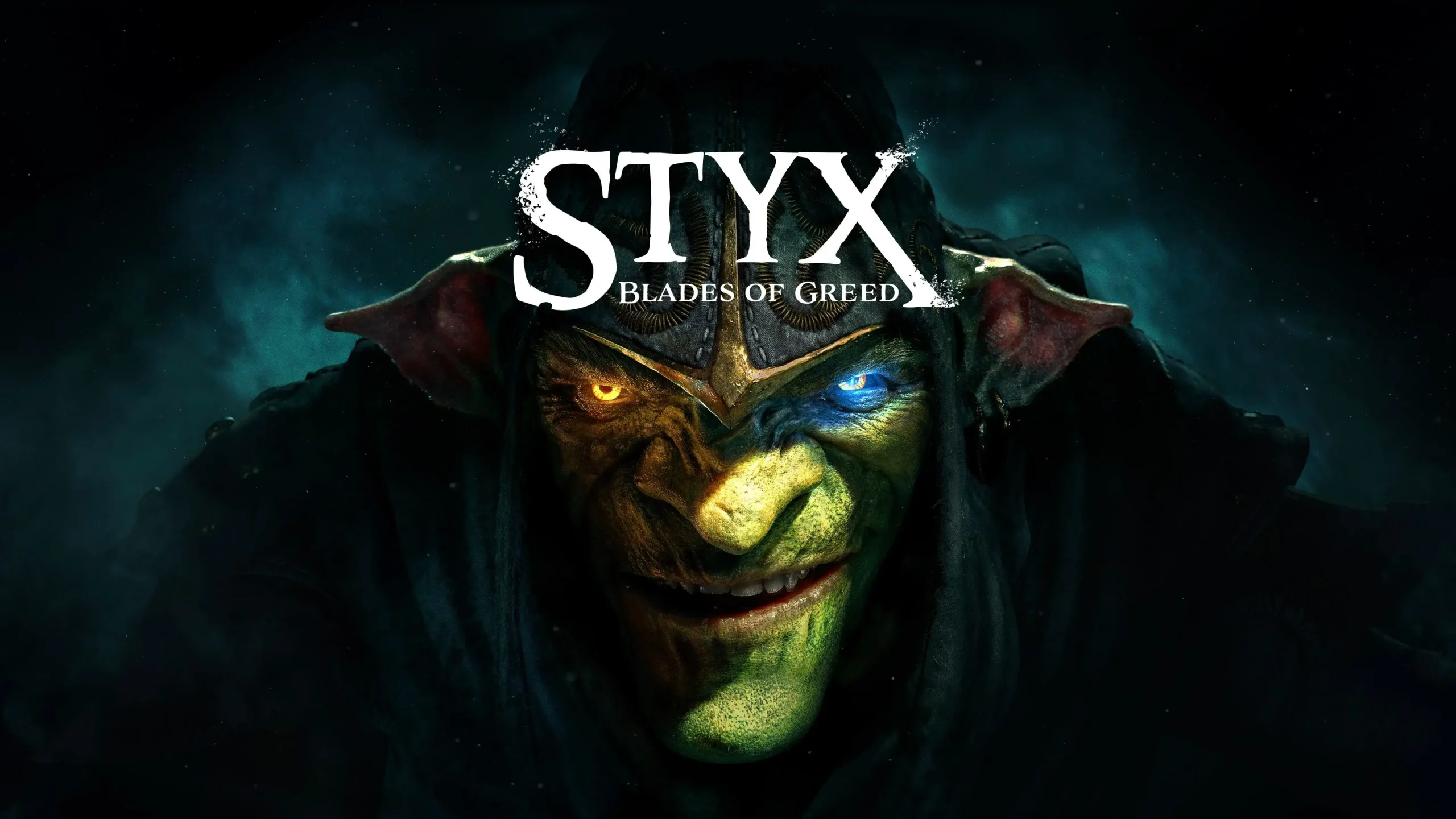

The saga of the thief goblin returns with a release that marks its validity in the new generation.
Take a look at these other reviews
- Review of Resident Evil Requiem – Returning to Raccoon City has never been so unsettling
- Review of Rayman 30th Anniversary Edition – A good tribute that could have aimed higher
- Review of Kingdom Come: Deliverance NextGen Update – The definitive return to medieval Bohemia
| Don't miss anything and follow us on Google News! |
Styx is alive and kicking, and has arrived on the current generation of consoles with a completely revamped arsenal, but who is Styx and why am I talking about him as if you already knew him? Well, first and foremost, because that’s the case, but if you’re new to the series with this title, let me give you some context so you can see where you’re getting into.
The character conceived by Cyanide Studio originally appeared in the game Of Orcs and Men which was released on Xbox 360 in 2013 and is the most recent game in this universe chronologically. Styx made his solo debut in Styx: Master of Shadows in 2014 on Xbox One, a game that was followed by Styx: Shards of Darkness in 2017 on the same generation, and which continues in the title that brings us together today, Styx: Blades of Greed.
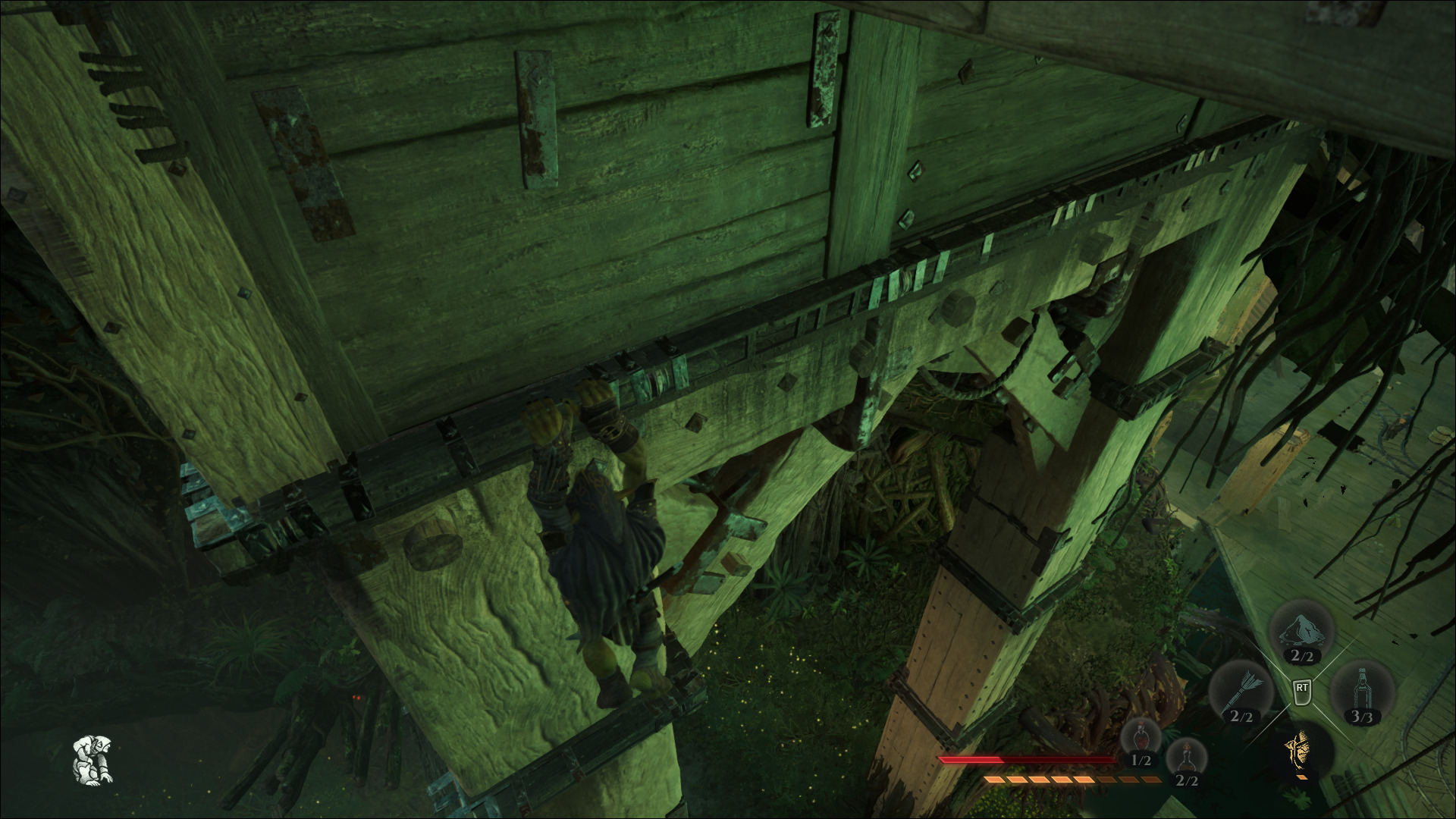
Unlike what happens in Of Orcs and Men, the Styx saga specializes in stealth, something it does very well, helped by the design of the goblin’s size, a character of small dimensions that can easily fit into holes, chimneys, climb beams and hide quickly using objects scattered throughout the scenarios.
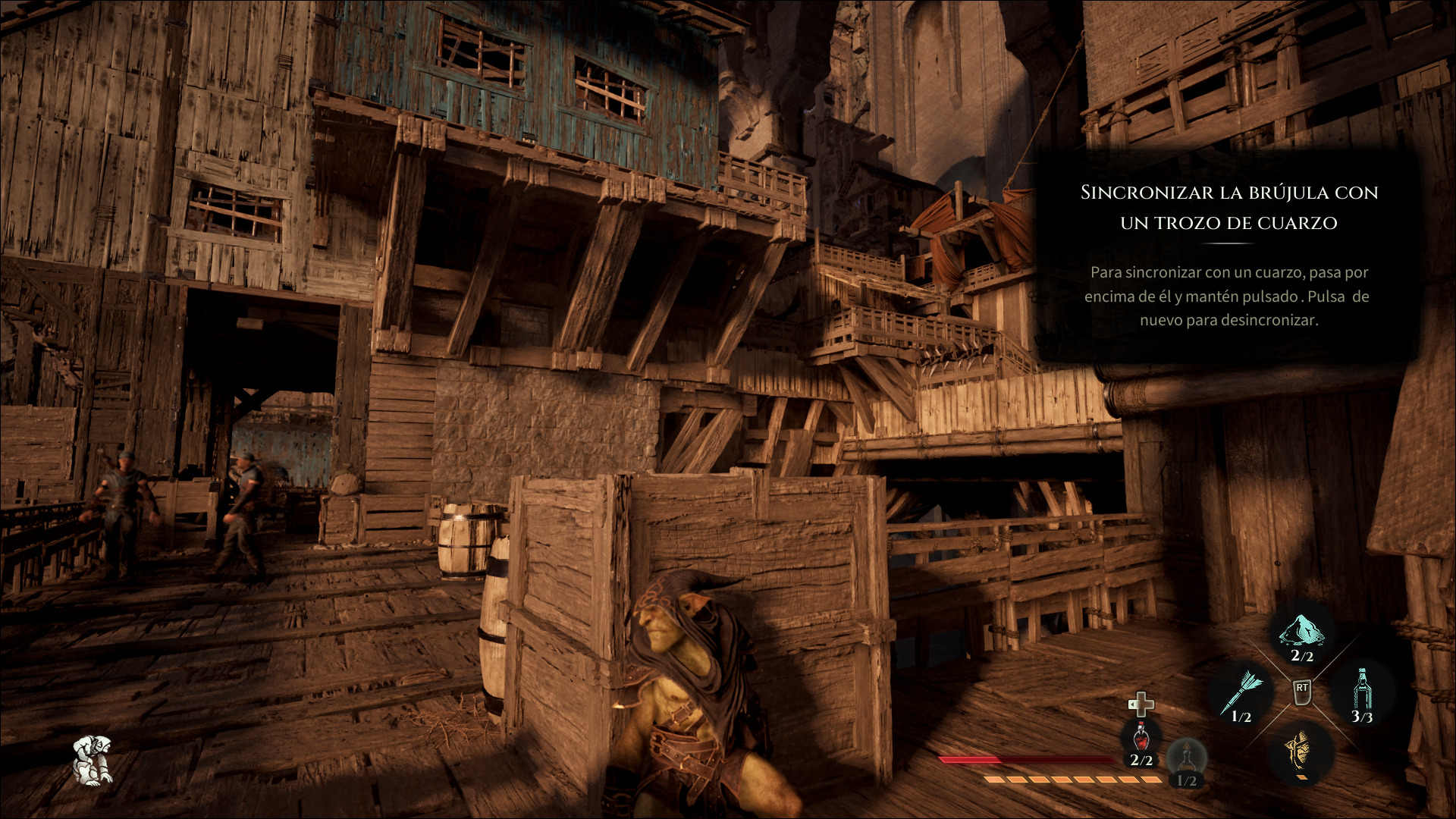
If you’re in doubt about starting with this game without having tried the previous ones, you should know that while the characters refer to situations that have already happened and some references will go unnoticed, the game is very enjoyable without knowing all the history that precedes it.
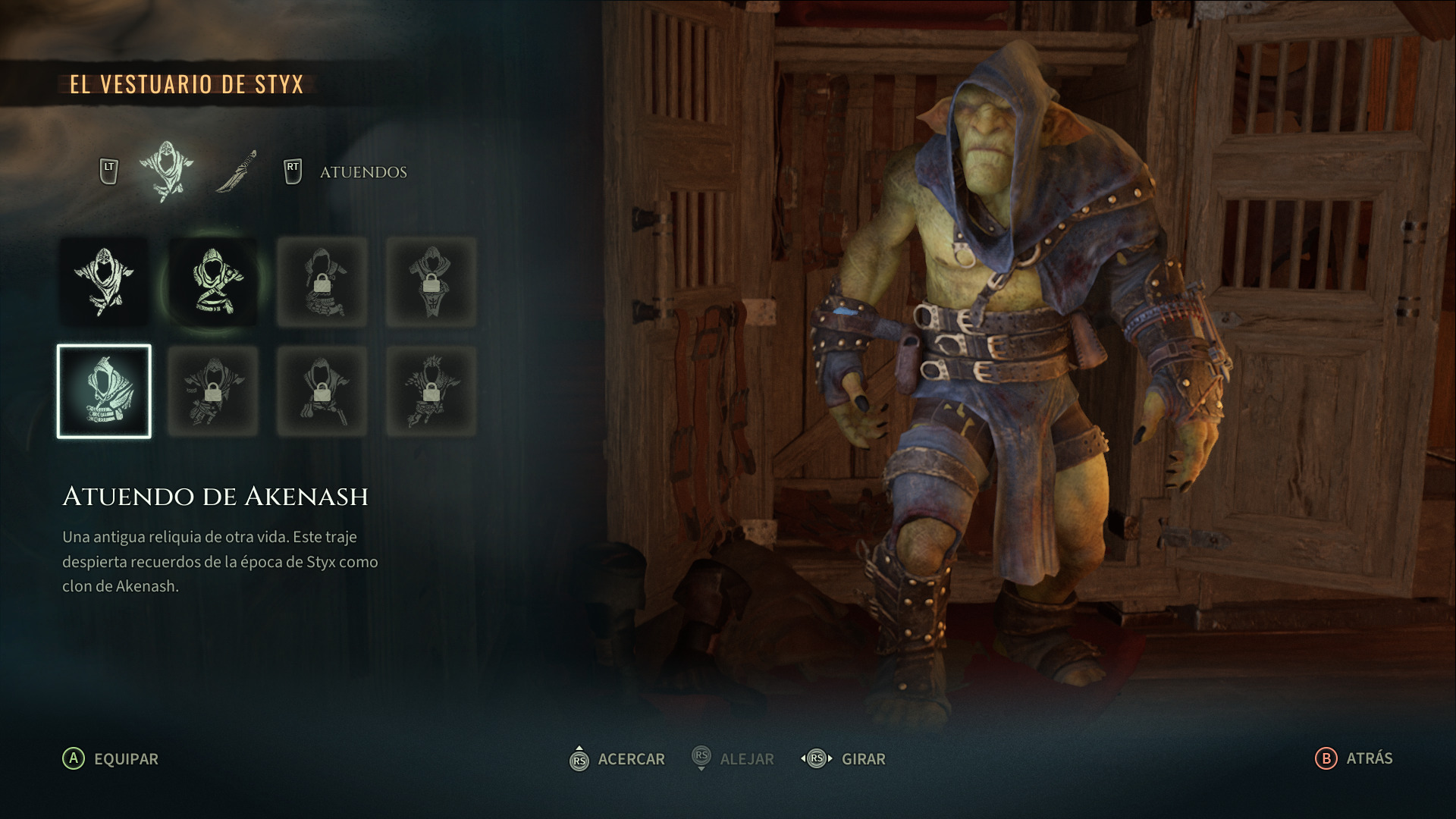
Styx: Blades of Greed continues from the events of the previous game with a story that is told in retrospect. In this adventure, an entity called “The Flow” appears, which begins to speak and interact with Styx after the goblin absorbs certain special crystals that will eventually give him some unusual powers and some problems as well, as it couldn’t be otherwise.
Put on your darkest clothes, sharpen your weapons, and check your arrows, we’re going on an adventure where going unnoticed is the only thing that will keep us alive. Join me.
Technical Section
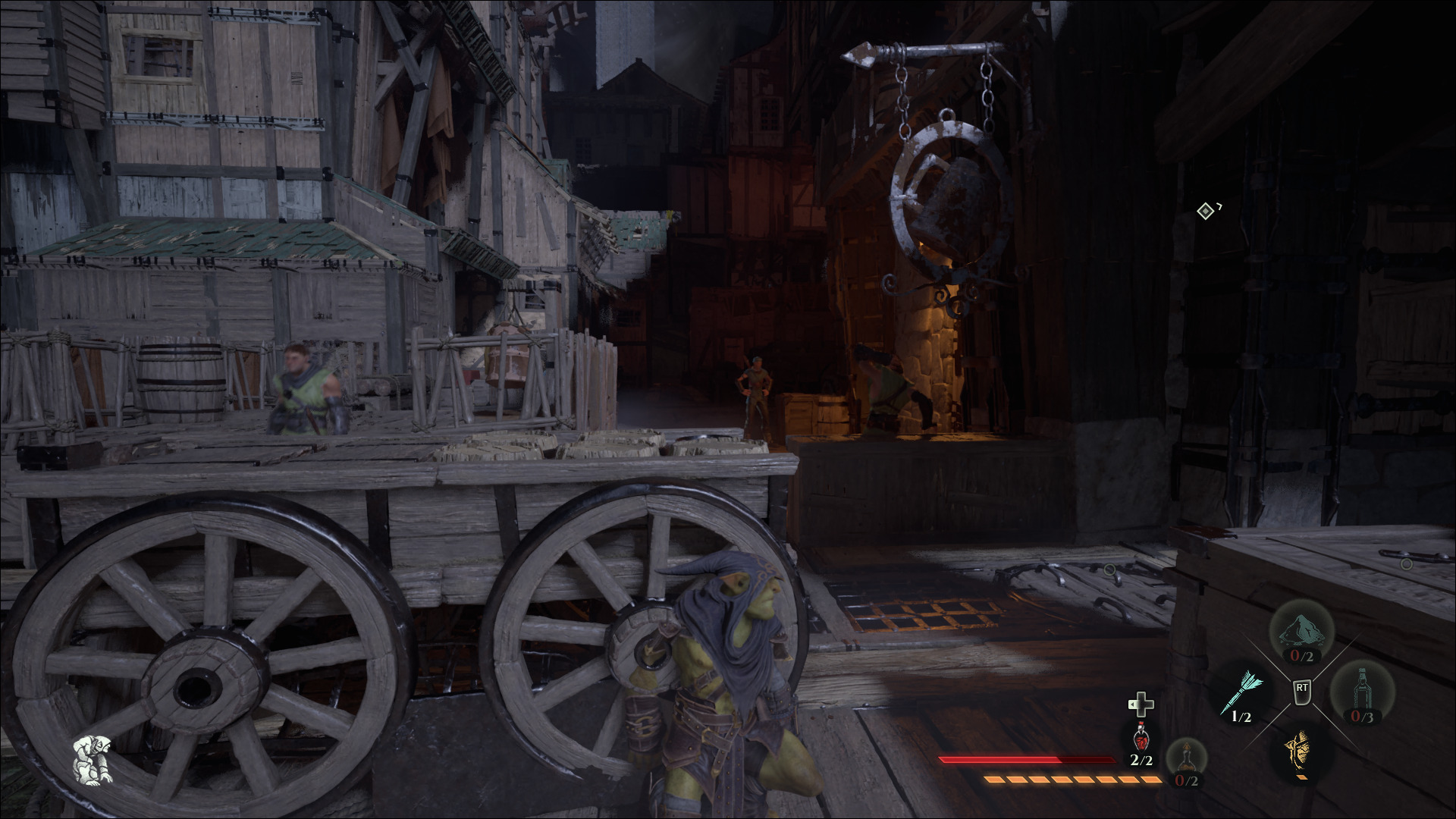
I’ve always found the designs of the Styx saga to be very interesting, both in terms of characters and worlds, and in Blades of Greed the quality is maintained and is in line with the current generation of consoles. The cinematics, although not abundant, are also very well done; the problems I noticed during my analysis hours in this section have to do with two things: the first is that the textures sometimes take a long time to load, even in cinematics, which creates a strange effect that, although brief, is uncomfortable. The second is the lighting; the transition between light and shadow also has a certain delay and, many times, it’s hard to understand where the character is and where to go, which complicates the game in situations of escape, for example.
The game’s soundtrack appears in the necessary moments and is based on violins and other traditional instruments that bring it closer to that epic and medieval atmosphere in which the adventure takes place. The performances of the team in charge of the voices are really very good and manage to give personality to all the characters in just a few interactions.
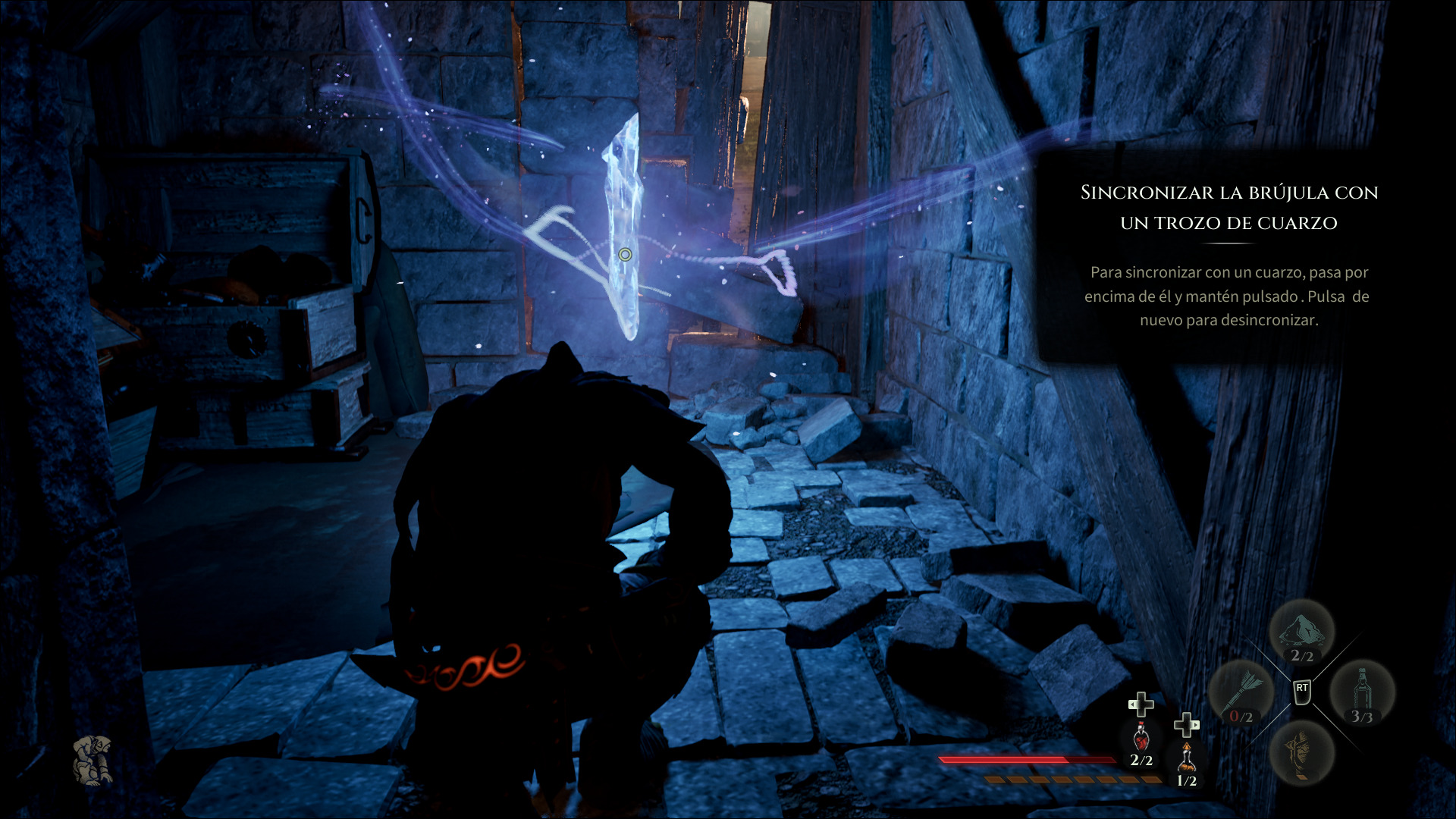
The dubbing is only available in its original language, English, but as for text, the game is localized in Spanish in its Iberian variant. I always try to analyze titles in Spanish to learn from the errors and successes of my fellow localizers, and in this case, while the general work is good, there were some texts that really detracted from the gaming experience, such as the tutorial for using the compass, which I found indecipherable and could only determine its use through trial and error.
Gameplay
The first chapter of the game allows you to get to know what the main mechanics of a title that is very extensive will be, mainly if the person behind the controller decides to do the side missions, as was the case with the person writing this. This first stage of the game can be a bit confusing, in the good sense, since the title presents itself with a very conductive story in which Styx must recover some crystals and rescue the characters that will become recurrent in the adventure, but this focus is lost as you progress.
As the story advances, the protagonist gains abilities, either through progress points or by recovering plans or runes that function as a means of exchange for things like expanding the inventory capacity or improving some powers. Progress automatically enables some mechanics, such as hanging from a hook or executing some powers of The Flow.
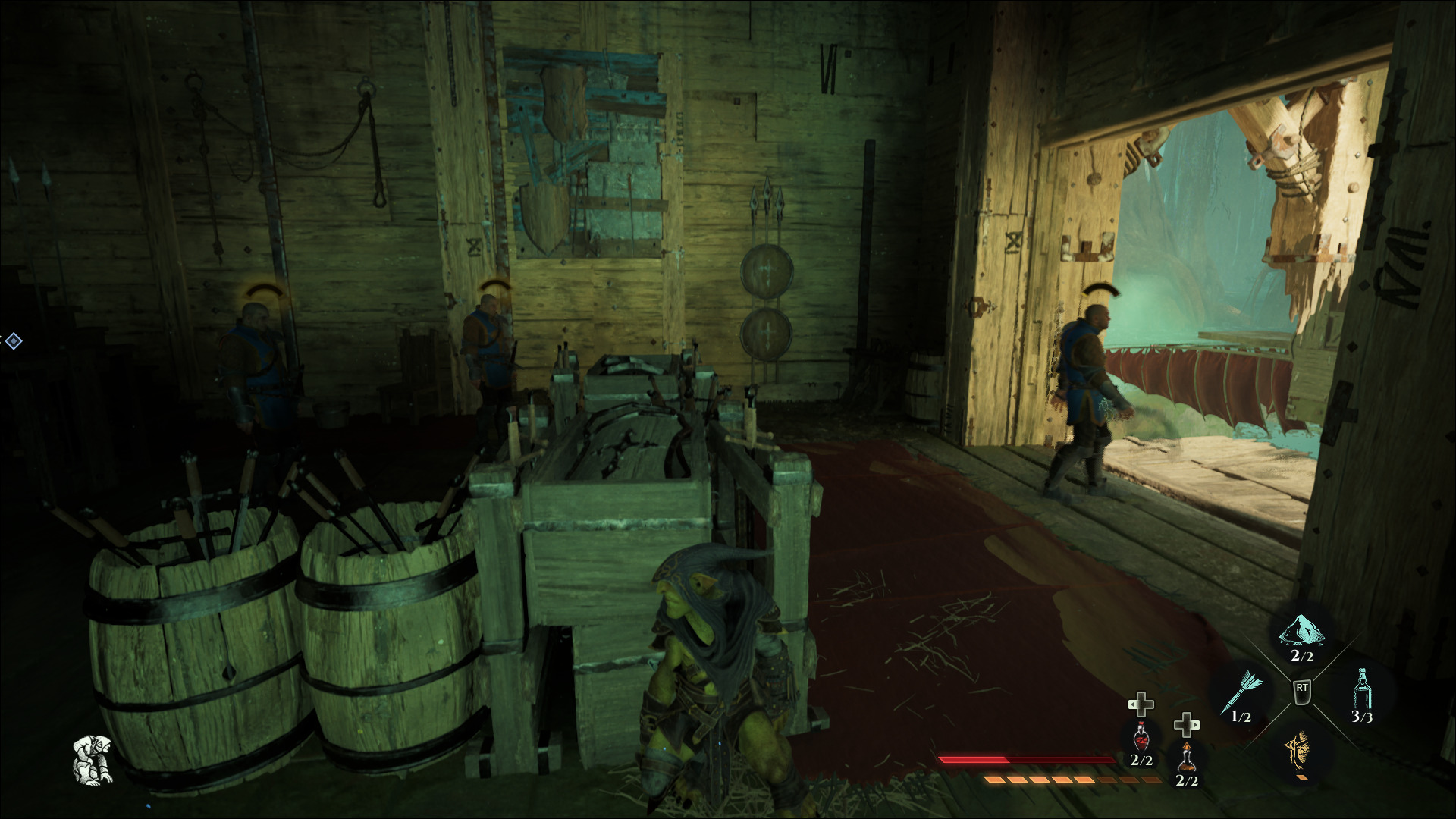
The levels deserve a design award. Not only are they gigantic, but they also have many details, places to hide, different holes and paths to reach the same place, and several displacement options distributed everywhere. In contrast to the excellent level design, repetition appears, and you’ll always have to return to the same three scenarios at different stages of the game to collect more crystals or complete missions from the crew members. While it’s true that in different opportunities you access different points of the scenarios, the world in which the action takes place is the same and can become tiresome at some point, mainly because the story is long.
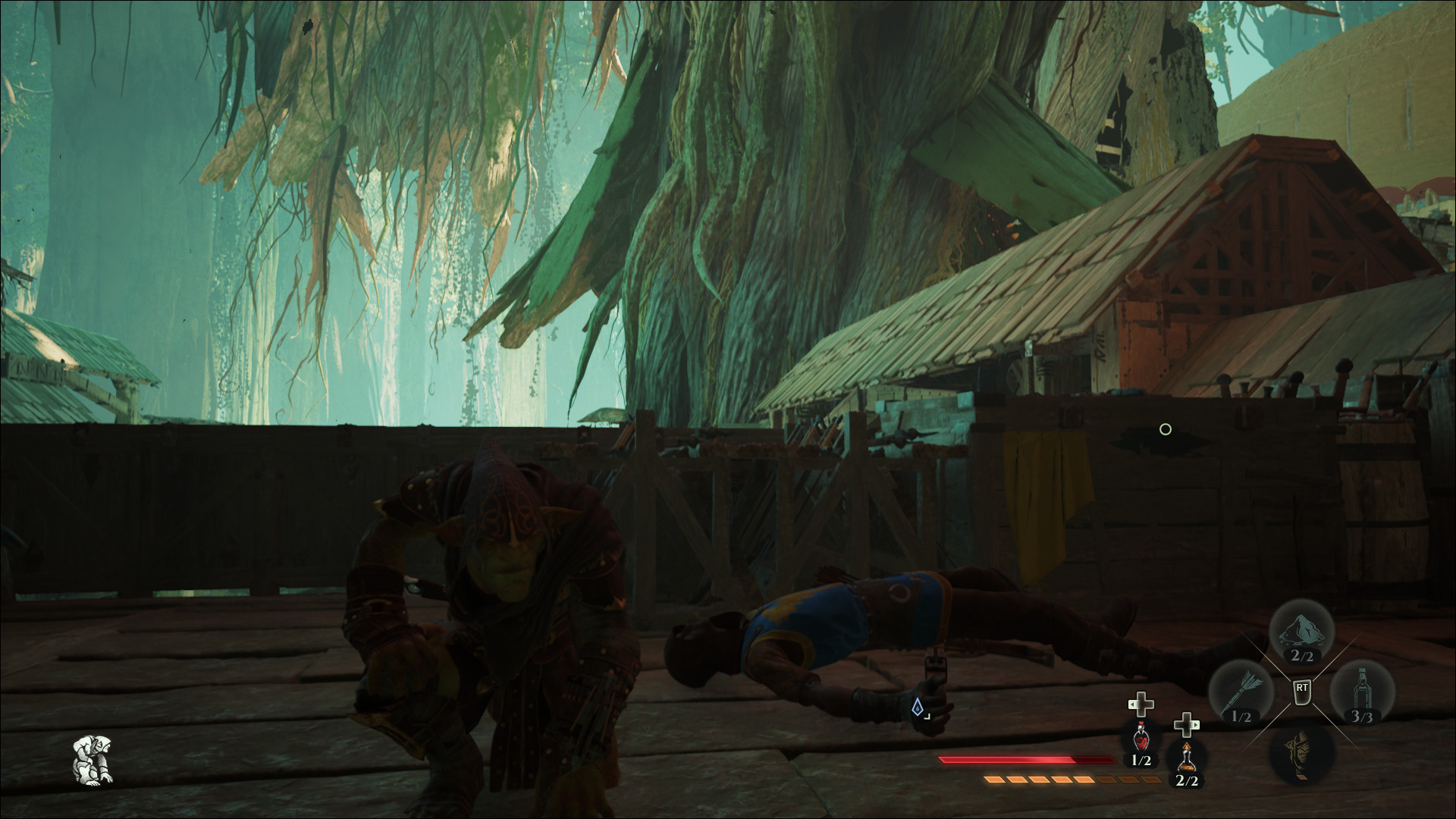
The stealth is interesting, the lower left corner of the screen shows Styx’s exposure depending on the light and other factors. Killing using stealth can also lead to alerts against all logic, since there are stronger stabbings that the closest enemies will hear and investigate immediately. The only foolproof way to assassinate is when the protagonist leans and attacks from a surface or from within a hiding place.
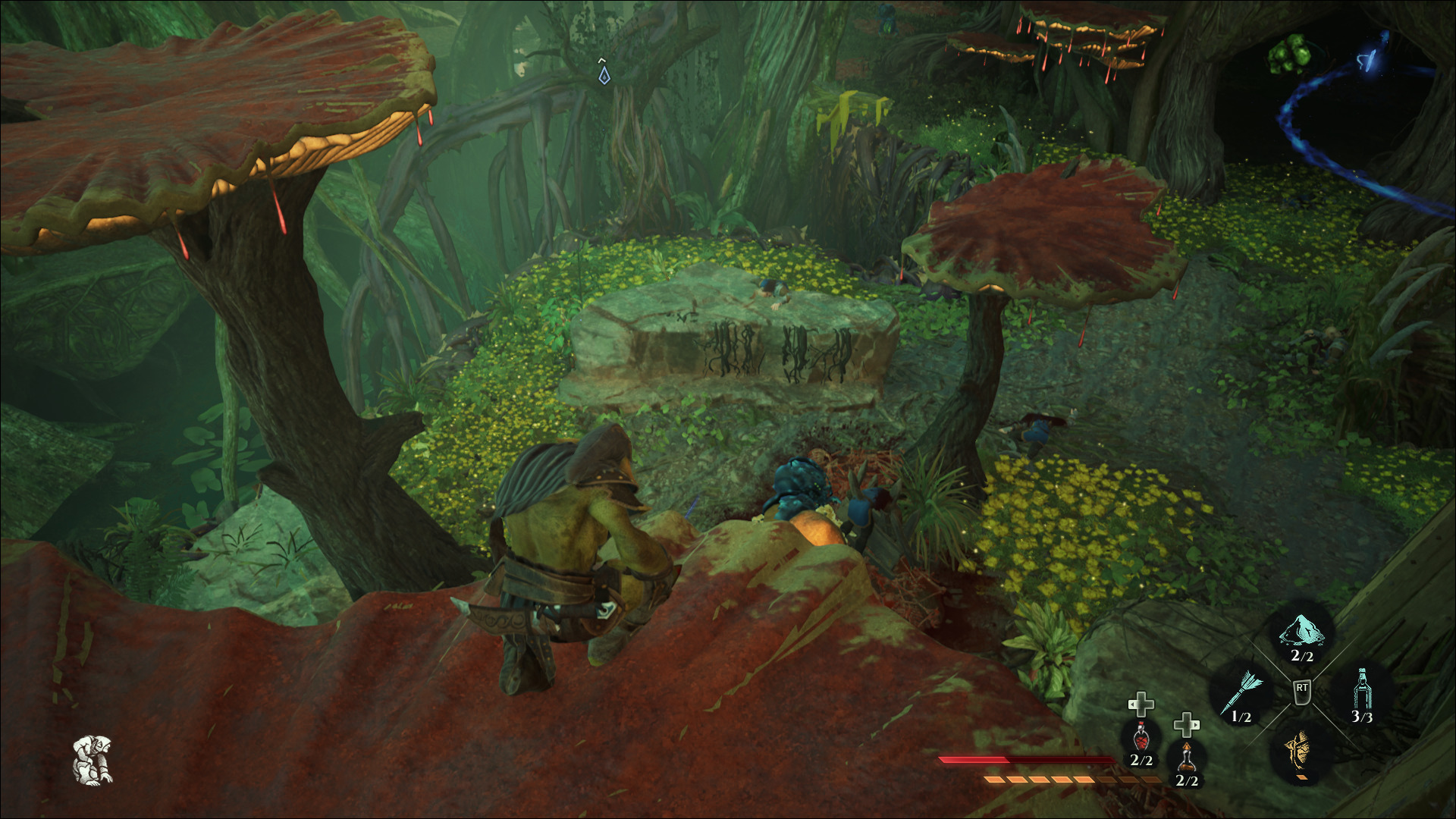
To prevent the bodies of enemies from being discovered by their companions, they can be hidden or dissolved in acid. It’s also possible to shoot darts from a distance or use some environmental objects as traps to annihilate even several enemies with a single blow. Styx can use an amber liquid that makes him invisible for a few seconds and even create a clone of himself that will produce a distraction in the adversaries; you can also throw bottles to distract enemies, extinguish torches, and even whistle to attract rivals towards some traps.
Enemies can be inquisitors, regular soldiers, and even giant insects of various species, but within each type, there are diverse classes, including stronger and more powerful enemies that cannot be eliminated with a single blow unless the liquid or drink they are consuming is poisoned or an object is thrown at them.
When discovered, Styx can fight hand-to-hand with his attackers, but this, except in exceptional cases, results in a certain death. The game is almost exclusively designed for stealth, and traditional confrontations pale in comparison; enemies take away a lot of energy with any blow. To attack, it’s necessary to focus on the adversary beforehand and dodge the blows at the right moment, which is extremely difficult. Additionally, the feeling of being hit is almost non-existent and is only evident when the protagonist dies. Fortunately, with the press of a button, you can make a quick save, a command that is extremely necessary.
Duration
Between the main and secondary missions of Styx: Blades of Greed, we’re talking about a title that easily has around 30 hours. In my opinion, while it’s a good amount of time, the repetition factor also appears with the same three scenarios in different acts and missions.
Conclusion
The stealth formula of the saga remains intact and immaculate; lovers of this type of game will love Styx immediately. However, the development of such an interesting character is still falling short, and the hand-to-hand combat still has a lot of work to do. Reinforcing this last point would give the game additional depth; the same could be said of adding more scenarios to the production.
In short, this installment of Styx delivers, but I think it has tremendous potential to grow exponentially. A saga that I will continue to pay attention to because I know it can be a true cult IP.
*We thank Nacon for the material provided for this analysis.


Translator and video game localiser with a passion for retro titles and simulators. He has never let go of a controller since he was given an Atari 2600. He collaborates with different developers in the localisation of their titles into Spanish through Camelot Translations.
Related Post