


Video games can unite families: playing together improves communication, reduces digital risks and strengthens the bond between parents and children.
More stories in the category Editorial
- Has the quality of Xbox controllers decreased? The community debates about it
- Top of the most expected Xbox games of February
- The future of Xbox starts to take shape: this comes after Series X/S and GTA 6
| Don't miss anything and follow us on Google News! |
For years, we’ve lived with a very limited and misguided image of video games. They were seen as a solitary form of entertainment, almost isolating: a screen, a controller, a dark room, and hours that many considered “wasted”. This imaginary not only marked those of us who grew up playing, but also parents, who, due to ignorance or lack of closeness, raised barriers instead of accompanying or showing interest. Fortunately, that vision is starting to become outdated. And it’s precisely from this transformation, from how we went from solitude to companionship, that I want to start understanding the family bond that video games can generate.
Video games have become such an integral part of our daily lives that they’ve stopped being just a hobby: today they’re a cultural medium with an impact comparable to, and sometimes even greater than, that of cinema, music, or television. And this has a clear generational explanation: today’s parents are, to a large extent, those children who grew up with a console in their hands three decades ago. This familiarity makes their children’s approach to video games something natural, less threatening, and more understandable.
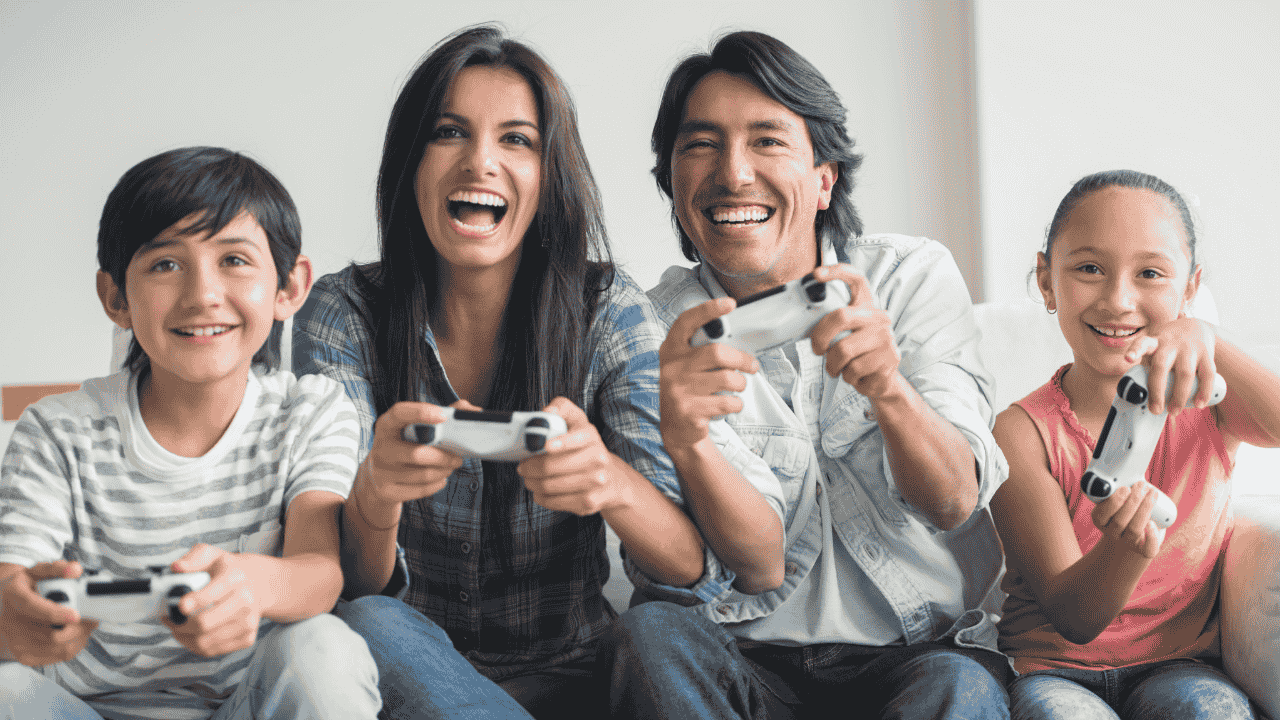
The generational gap narrows when we play
One of the biggest barriers has been the disconnection between what parents think happens when their children play and what the children actually experience. There’s a clear gap between these two perceptions: while many adults interpret video games as a trigger for addiction, isolation, or bad mood, children describe a much broader and more nuanced range of emotions, very different from what fuels prejudice.
- It’s true that some precautions are justified. In the digital environment, there are real risks, from harassment to sedentary lifestyle and problematic uses. But precisely because of this, the discussion becomes even more relevant: peace of mind doesn’t come from prohibition, but from accompaniment. Understanding children’s tastes and being present in their experience reduces anxiety and allows for better family decisions.
When this gap in perceptions is maintained, it often generates unnecessary tensions. Parents impose restrictions based on their fears, while children seek ways to enjoy what they’re passionate about, even in secret. This ends up creating unhealthy dynamics around video games.
But that’s where the opportunity arises. When adults join the game, participate, ask, observe, and share, the distance shortens. Distrust decreases. And video games stop being a battleground to become a meeting space.
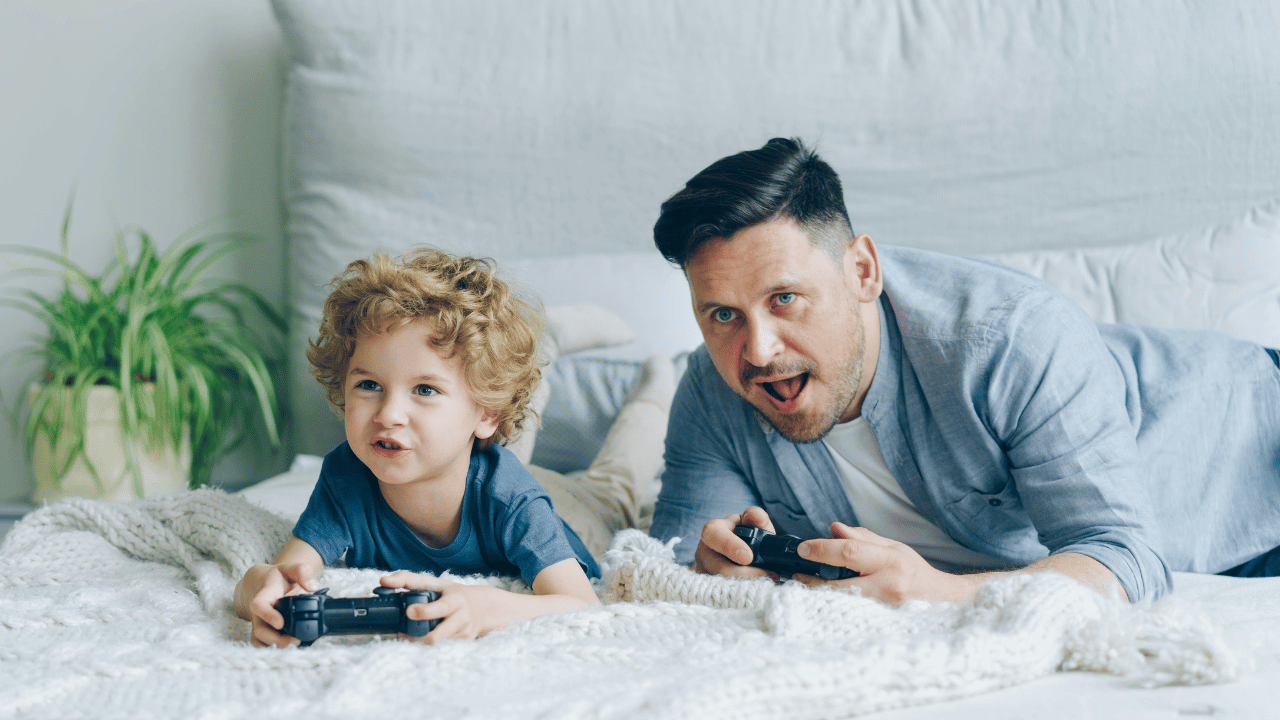
From stigma to encounter: when video games bring families together
Although the stigma persists in some contexts, science has been showing for years that playing can strengthen coexistence. Recent studies show that video games not only entertain: they also foster cooperation, communication, and joint decision-making. These skills acquire special value, or are reinforced, when the game occurs within the family.
- However, the positive effects that video games can have on children continue to be difficult for many families to identify. They’re often perceived as a simple means of entertainment, leaving aside their formative, emotional, or even social potential. This incomplete perception directly influences parents’ concerns.
Often, they focus more on the time their children spend playing and the possible negative effects on their mood, rather than being interested in how they play, with whom they play, or what benefits they get from that experience.
- Cultural distance also plays a role. As different studies reflect, in countries where video games took root earlier, such as Japan, it’s more common for parents and children to play together. There, around 70% of parents share gaming sessions with their children, while in European countries that figure barely reaches 32%. This difference not only speaks of different customs but also of how history and culture shape the way families understand and live video games.
Playing with children strengthens the bond
In the end, everything converges on one idea: parental accompaniment not only reduces risks but also strengthens the relationship between parents and children. Various studies on parental mediation agree that balanced guidance, neither intrusive nor distant, decreases the likelihood of problematic technology use and improves family coexistence.
The data also show something key: when children feel supported and guided, they not only have a lower risk of acquiring harmful digital habits, but they also develop better emotional and behavioral self-regulation skills in digital environments.
This is no coincidence. Playing is dialogue. Playing is entering someone else’s world. It’s a way of accompanying from within, not watching from outside.
Of course, children will continue to be children: they’ll want to play more than allowed, lose track of time, or get frustrated easily. This exploration is part of their natural process. That’s why the response can’t just be prohibition or distance, but presence, guidance, and understanding.



Lover of videogames, Xbox, Halo and Gears of War.
Related Post